The Big Issues You’re Likely To Face in the Days Ahead, and How to be Ready For Them |
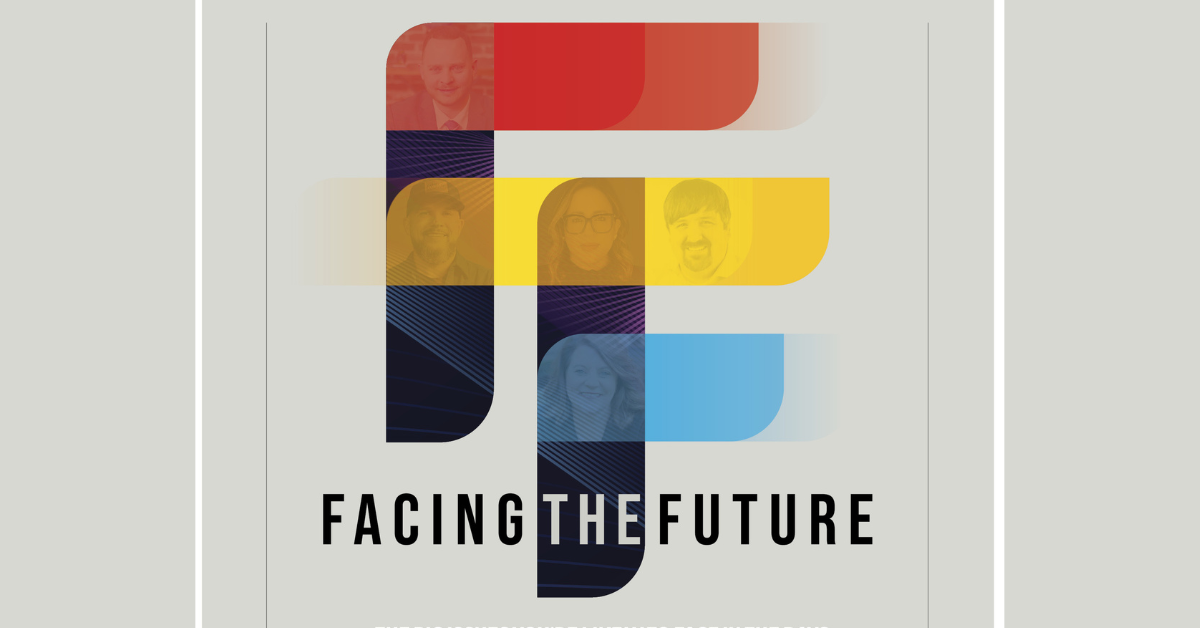
Economic upheaval, technological change and demographic shifts—the future for those in the insurance and financial services world has perhaps never seemed more uncertain than it does at the start of 2026. You need some clear guiding principles for navigating what the year ahead may bring. To help you, we turned to the members of Korsgaden Insights’ new editorial advisory board for some insights and advice. Their collective wisdom, drawn from years of real-world experience and expertise, can help you look forward to whatever comes with expectation and enthusiasm.
Michael Cruz established his Foresight Insurance, LLC agency in North Bethesda, Maryland, 10 years ago after three years with Liberty Mutual as a captive personal lines agent. Foresight has 14 team members: six U.S.-based licensed agents and eight Colombia-based virtual team members. Michael’s awards include Safeco/Liberty Mutual 2024 Agent for the Future–Outstanding Agency Overall. He is also a conference speaker and writer. What originally drew him to insurance, and what continues to inspire him today? “I didn’t plan to be in insurance: I fell into it. What keeps me here is the impact we strive to make. We’re not just trying to sell policies; we’re trying to transform confused policy holders into informed insurance clients.
Bradley Flowers is the founder of Portal Insurance in Mobile, Alabama, with 17 team members in two locations. His business was named a 2019 Safeco/Liberty Mutual Agency for the Future and a 2025 Best Practices Agency. With 15 years in the industry, Bradley is a regular conference speaker and co-host (with Scott Howell) of the popular The Insurance Guys Podcast. What originally drew Bradley to insurance, and what continues to inspire him today? “My grandfather passed away at a young age; I remember as a young child, my family talking about the important role life insurance played in taking care of my grandmother. . . [that’s one of the] things [that] initially attracted me.”
Ciara Gravier, a 20-year-plus veteran of the industry, is founder and CEO of The Bunker Insurance & Risk Management in Davie, Florida. A sought-after industry speaker, her honors include the Latin American Association of Insurance Agencies’ Young Agent of the Year. She is also the host of The Bunker Talk, a South Florida business podcast highlighting local CEOs and founders. What originally drew her to insurance, and what continues to inspire her today? “I grew up watching my parents leave corporate America in their late 40s and gain the freedom that entrepreneurship brings within the insurance industry. I love translating complex coverage into something business owners can understand and use.”
CJ Hutsenpiller is the founder of Hutsenpiller Insurance, with offices in Mount Juliet, Tennessee, and Gallatin, Tennessee. A 19-year veteran of the industry and well-known conference speaker, he was the 2015 Professional Insurance Agents of Tennessee’s Agent of the Year. What originally drew him to insurance, and what continues to inspire him today? “I was drawn to this profession because I enjoy taking complex things and breaking them down and teaching them on a level that anyone can understand.”
Carey Wallace‘s AgencyFocus in Charleston, South Carolina, serves agencies nationwide, providing financial consulting on valuation, perpetuation planning, fractional CFO services, compensation analysis and acquisition analysis and consulting support. Carey was recognized as an Elite Woman in Insurance in Insurance Business America magazine’s 2019 Elite Women Edition. She is the co-host (with her daughter, Lindsay Sexton) of the Business Refocused podcast. What originally drew her to insurance, and what continues to inspire her today? “Like many, I fell into insurance. As an entrepreneur myself, I absolutely love working with many agency owners who are entrepreneurs through and through who love and serve their communities.”
Korsgaden Insights(KI): Looking ahead three to five years, where do you believe the strongest growth opportunities lie for our profession, and what should we be preparing for now?
Michael Cruz (MC): The biggest opportunity is operational efficiency that actually improves the client experience rather than degrading it. Agencies who figure out how to use technology and remote teams to deliver faster, more consistent service—while keeping the human relationship at the center—will dominate. Specifically: shared inbox systems, team-based service models and strategic automation that routes work to the right people without adding friction.
Bradley Flowers(BF): I think as more and more agencies get gobbled up and acquired by bigger players, and more large agencies merge (just as the recent merger we saw between CAC Group and The Baldwin Group, which are both massive agencies) it creates a huge opportunity for smaller agencies who are typically more efficient to use technology that allows them to compete for accounts that otherwise would only be interested in working with large national agencies. It has a trickle-down effect.
Ciara Gravier(CG): The strongest growth will come from the intersection of technology, specialization and advisory-driven service. Businesses are facing more complex risks and they’re looking for advisors who understand their industry at a deeper level and can communicate complex concepts in a way they can understand. Agencies that specialize, teach and lead with proactive risk management will grow the fastest. We should be preparing now by becoming experts in specific verticals, building educational content and integrating technology that enhances, not replaces, the human advisory role.
CJ Hutsenpiller(CJH): I believe that in the past, agents could get away with operating with old and antiquated practices and still maintain competiveness with more tech-forward agencies. With AI, those agencies that are using technology will be able to run laps around those that don’t, and historically speaking, most agencies don’t adapt to technology well. It will become the haves and the have-nots.
Carey Wallace(CW): I believe that the agents that are thinking about how to evolve as the world around us changes will be the ones that thrive in the future. As our customers’ expectations change, agents need to change as well. Living in a world where information is able to be obtained immediately is changing every part of our lives, so our ability to leverage technology, AI and automation to continue to serve clients while maintaining the trust that is necessary to advise clients appropriately is nonnegotiable. The agents that are able to leverage technology and data while maintaining relationships and trust will be the ones that flourish.
KI: From your vantage point, what are the most pressing challenges agency owners and field leaders are facing today? Which solutions or approaches feel most promising?
MC: Burnout and turnover. The hard market has squeezed margins while client expectations have only increased. The solution isn’t working harder; it’s working smarter through well-thought-out, documented processes and team-based systems that eliminate “hero culture” where one person becomes indispensable. We’ve implemented a four-day workweek that’s improved retention and productivity simultaneously. When any team member can pick up where another left off, everyone can actually take real time off.
BF: I think the two biggest challenges for agency owners today are: 1) There has never been a time in the history of the world where people had access to as much information and knowledge as they do now due to the internet and social media. For example, think about agency owners 30 years ago. Realistically, they were only privy to people who were in, say, maybe a 300-mile radius of their office, but now with social media, I can reach out to an agency owner halfway across the country, or for that matter all the way across the country, and share ideas. We have a great opportunity to gain knowledge from people who are experts in their fields that otherwise we might not have access to. That being said, there’s such a plethora of information available it’s basically information overload now: choosing what information to believe, and what tactics and strategies to use can be a pressing challenge. 2) Culturally, it’s never been more popular to paint insurance as the “bad guy.” This is amplified by tools like TikTok and X.com, and I think that’s going to be a challenge moving forward. In that case, I’m betting on the people that can deepen their relationships with their clients and show that insurance is much more than the decisions that you see by insurance carriers that get national attention—there are a lot of recent social media posts going viral of insurance companies either taking rate hikes or pulling out of certain markets. We need to combat that with real-world stories that show people, “Hey, sometimes insurance companies do ‘not so cool’ things, but the far majority of people are better off because insurance exists.” As a good friend of mine put it, the only thing that keeps the United States from looking like a Third World country is insurance.
CG: The biggest challenge is capacity—not just carrier capacity, but human capacity. Agency owners are stretched thin, navigating retention, new business, compliance and service demands that have only increased. When I make decisions on my tech, I really like for it to be with a product whose founders are accessible and “one of us,” if you will—I love to work with tech companies that help independent insurance agents that have been started by current or past independent agents; they have sat in our seat in the past, they know our issues firsthand and they have created a solution for us.
CJH: The biggest challenge agency owners and field leaders face right now is complexity. Rates are rising, carriers are tightening, clients are more confused than ever and agencies are still trying to run modern businesses on outdated systems and habits. Add in talent acquisition, inconsistent follow-up, and referral relationships that aren’t being managed intentionally, and a lot of good agencies feel stuck despite working harder than ever. The most promising solutions are the ones that simplify and standardize without losing the human element. Agencies that are winning are investing in better systems, clearer processes and automation that supports producers instead of replacing them. They are also getting more disciplined about accountability, education and proactive client communication.
CW: Attracting and maintaining talent is one of the biggest challenges agents face, as well as transferring knowledge to the next generation. I believe that the roles inside an agency are changing and evolving and technology, AI and automation will continue to play a huge role in the agency. Managing the cultural transition as these factors evolve is an important focus for many agencies that are looking to position themselves for the future.
KI: How do you see the definition of an “exceptional client experience” evolving, and what shifts do agencies need to make to stay ahead of rising expectations?
MC: Clients tell us they want a relationship with one person. I believe clients want their problems solved fast, correctly and every single time—regardless of who answers. The shift agencies need to make is from individual ownership to team-based service. When a client has access to five to six trained team members with shared knowledge, instead of depending on one person who might be out sick, or one day leave the job, that’s actually a better experience, in my opinion. The relationship becomes with the agency, not just one agent.
BF: Let’s be honest. Insurance will never be bought and sold the way that things are bought and sold on Amazon. But that is increasingly becoming the expectation of the consumers. And I think, as insurance agency owners, we will never be able to achieve the Amazon level of customer experience and ease of purchase/ease of service. But I think there are things we can change in our agencies, whether it be processes, technologies or the way our employees communicate to the customers, that we can get closer to that benchmark. And I think that’s the way that we need to evolve.
CG: An exceptional client experience is moving toward one that is simple, proactive and transparent. Clients want faster answers, easier access to documents and advisors who reach out before there’s a problem. The agencies that become their clients’ strategic partners instead of just policy providers will stand out.
CJH: Consumer behavior is changing fast, and agencies have to change with it. Clients expect faster responses, clearer communication and fewer hoops to jump through. They want to text, self-serve when it makes sense, and still have a real expert available when things get complicated. The old model of annual touchpoints and reactive service just doesn’t cut it anymore. An exceptional client experience today is proactive, frictionless and human. Agencies that stay ahead are using technology to remove delays and confusion while doubling down on education and advocacy. The goal isn’t more touchpoints, it’s better ones. When clients feel informed, protected, and supported before something goes wrong, that’s when you’ve delivered a truly exceptional experience.
CW: Taking a proactive and predictive approach to customer service is the way of the future—simply responding will no longer be enough as the world around us continues to change.
KI: As AI becomes more ingrained in both our industry and our clients’ lives, how do you think it will reshape the way agencies create value and differentiate themselves?
MC: AI will commoditize the transactional parts of insurance—quotes, basic service requests, document processing. The agencies that thrive will use AI to handle the routine so their humans can focus on what actually requires human judgment: complex risk conversations, education and relationship building. As they say, AI won’t replace agents, but agents who use AI effectively will replace those who don’t. The differentiation will be how you deploy AI to enhance the human experience, not replace it.
BF: I know this is the popular thing to talk about now, but AI is a freight train that’s coming for every industry. Personally, in my agency, we’re using AI in ways to take menial tasks that we would normally have a human doing and having the AI complete that task. It doesn’t mean that we’re going to replace somebody’s job with it. What it means is the person that would normally be doing that task is now on to more revenue-generating activities that actually add value to the agency. There is also a lot of noise out there, and there are a lot of AI tools that I think are not nearly up to par or don’t have the functionality that we actually need to have in order to use it. Being able to cut through that noise and be smarter about the tools we select, not just going with the flashy new thing or the tool that the slick salesperson sold us with empty promises, is imperative. I think we need to be prepared for customers to use AI and be more educated when it comes to purchasing insurance. I look at it sort of the way that the automotive industry looked at TrueCar when TrueCar became a thing. We need to be prepared for a more educated consumer, or at the very least, a consumer that thinks they are more educated because the AI told them something.
CG: AI will handle the repetitive work, but it will also raise the bar for advisors. When everyone has access to faster processing, the real differentiation becomes expertise, insight and judgment. AI will push agencies to spend more time in front of clients, build deeper specialization, deliver education and thought leadership, and provide strategic guidance that technology alone can’t replicate. In short, AI will make the human element more valuable, not less.
CJH: AI is leveling the playing field when it comes to information. Clients can fact-check coverage, pricing and policy language instantly, which means surface-level knowledge is no longer a differentiator. Expertise, judgment and the ability to interpret information in real-world scenarios are what will matter most. Agencies that rely on memorized talking points are going to struggle. AI is also changing how people search and make decisions. As traditional search engines lose influence and LLMs become the front door to information, agencies will need to think differently about visibility, trust and authority. The agencies that win will be the ones that consistently demonstrate expertise, provide clear guidance and show up as credible advisors wherever clients are asking questions. AI doesn’t replace the agent. It raises the standard for what a good one looks like.
CW: Providing the advice on what to do with the information available to clients as risk evolves will always be a need that agents will fill. Specialization will become more and more important for agents to provide the level of care necessary.
KI: If you were to share one piece of guidance with agency owners who want to grow with purpose, what would you tell them—and why?
MC: Document everything. Build systems that work without you. The best time to plant a tree was 20 years ago; the second-best time is now. Start by mapping your processes, then systematically remove yourself as the bottleneck. Growth with purpose isn’t about getting bigger; it’s about building something that delivers consistent excellence, whether you’re there or not. That’s when you go from owning a job to owning a business.
BF: I think this is an internal thing, not necessarily an external thing. You have to operate as if you work for your staff. Not the other way around.
CG: Get extremely clear on who you serve and build everything around them. Claim your digital real estate now. It’s endless and the large, big-box agencies don’t utilize it like we can. It’s one of the best ways to develop your personal brand in your community—or in the community you choose regardless of geography. The higher the requirement of trust the profession has, the more important your personal brand is. Start now where you are and with what you have and tweak along the way.
CJH: Slow down and build with intention. Growth without clarity just creates more noise, more stress and more risk. Be clear about who you serve, how you create value and what you refuse to compromise on. Then build systems and a team that support that vision.
CW: I believe that the agents that are thinking about how to evolve as the world around us changes will be the ones that thrive in the future. Lean into the change and focus on things that cannot be replaced that differentiate you—trust, relationships and connection.